
September 29, 2026
When an Insurance Claim Is Rejected in the UAE: What Policyholders Should Review Before Escalating
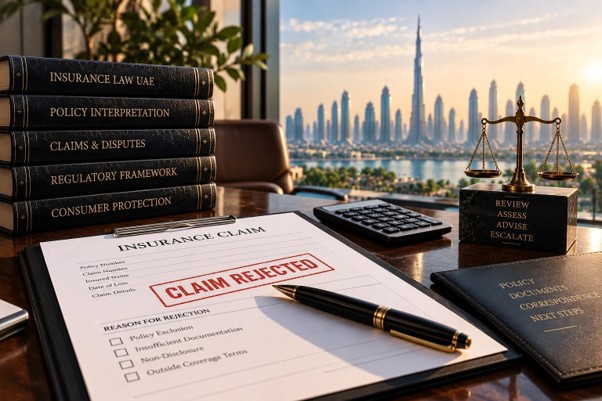
An insurer’s refusal is not always the end of a claim. The policy wording, evidence, exclusions and reasons for rejection can materially change the legal position.
An insurance claim may be rejected, reduced or delayed while the insurer requests further information. At that stage, the issue is not simply whether the policyholder disagrees with the decision. The real question is whether the insurer’s position is supported by the policy, the evidence and the applicable UAE insurance framework.
Federal Decree-Law No. 6 of 2025 Regarding the Central Bank, Regulation of Financial Institutions and Activities, and Insurance Business forms the principal federal framework governing CBUAE-regulated insurance business in the UAE. Article 148 also requires an insurance company to provide written reasons when a complaint or claim is rejected in whole or in part.
A careful review can show whether the dispute concerns coverage, an exclusion, disclosure, valuation, causation, missing documents or the way the claim has been handled.
Start With the Policy, Not the Rejection Email
The policy should be the starting point. Coverage clauses, definitions, limits, deductibles, conditions, endorsements and exclusions need to be read together.
An insurer may rely on one exclusion, but an endorsement or another policy provision may change how that wording applies. The facts must also fall within the clause being relied upon.
Timing can matter as well. Notice requirements, requests for documents and obligations following a loss may affect the claim. An insurance lawyer in Dubai can review the policy against the circumstances of the loss and assess whether the insurer has relied on the correct contractual basis.
Evidence Can Determine Whether the Claim Holds Up
Many insurance disputes ultimately come down to evidence.
A property claim may require photographs, repair estimates, surveys or expert evidence establishing the cause of damage. A business interruption claim may depend on financial records showing the extent of the loss and its connection to the insured event. Motor and liability claims can raise separate questions about fault, valuation and third-party evidence.
Policyholders should preserve the claim form, policy documents, invoices, photographs, reports and all correspondence with the insurer. Health insurance claims may also require medical records, treatment approvals and reimbursement documents.
An insurance dispute lawyer in Dubai can identify gaps in the file and determine whether an independent technical, medical or financial opinion may strengthen the claim before it escalates.
The Insurer Must Explain Why the Claim Was Rejected
A rejection should be reviewed against the reason actually given by the insurer.
Under Article 148 of Federal Decree-Law No. 6 of 2025, an insurance company that rejects a complaint or claim, whether wholly or partly, must state the reasons for its decision in writing.
That gives the policyholder a specific position to examine.
If the insurer relies on an exclusion, the issue is whether the exclusion applies to the event that occurred. If it alleges non-disclosure or inaccurate information, the review should consider what information was requested, what was provided and why the disputed fact is said to affect the claim.
Where liability is accepted but the amount is disputed, valuation may become the main issue.
A response built around the policy wording and supporting evidence is usually stronger than simply arguing that the rejection is unfair.
Health Insurance Claims Need a Different Review
Health insurance disputes can involve denied treatment, pre-authorisation, provider networks, exclusions, benefit limits, reimbursement or disagreement over whether a particular procedure falls within the policy.
A health insurance dispute lawyer in Dubai should first identify whether the issue is a coverage dispute or a complaint about the medical treatment itself. The two may arise from the same event, but they require different legal and regulatory analysis.
Emergency treatment also requires separate consideration. Dubai Health Authority standards provide that patients requiring emergency care should not be denied access because of their insurance plan or provider network. A dispute about payment or coverage should therefore be distinguished from the immediate obligation to provide emergency care where the relevant standards apply.
When the Complaint Moves Beyond the Insurance Company
Before approaching Sanadak, an eligible complainant must first submit an official complaint to the insurance company.
Under Sanadak’s current eligibility requirements, 15 calendar days must generally have passed after the complaint was submitted. The complainant may then proceed if no written response has been received, or if a response has been received but remains unsatisfactory, provided the other eligibility conditions are met.
Sanadak accepts eligible complaints from natural persons, sole proprietors and SMEs involving insurance companies licensed by the Central Bank of the UAE. Its published categories include health, vehicle, property, general, marine and life insurance.
If the complainant remains dissatisfied after the initial Sanadak process, an eligible insurance matter may be escalated to the Insurance Dispute Resolution Committee.
The correct route should be checked before proceedings begin because claimant eligibility, jurisdiction and whether the dispute is already before a court can affect the available process.
Conclusion: Build the File Before Escalating the Dispute
An insurance dispute becomes easier to assess when the complete file is reviewed together.
That means preparing a clear chronology and collecting the policy, schedule, endorsements, claim forms, rejection correspondence, expert material, invoices and supporting evidence.
This often makes the real disagreement clearer. The issue may be coverage, causation, valuation, disclosure or procedure.
Insurance disputes require careful policy interpretation, strong evidence and a clear understanding of the correct complaint and escalation process. Experience with the underlying insurance issue can be just as important as general litigation experience.
AY Advocates advises individuals, policyholders and businesses on insurance claims, coverage disputes and formal escalation in the UAE.
If an insurer has rejected, reduced or substantially delayed your claim, an early legal review can identify the policy provisions being relied upon, test the insurer’s reasoning and determine what evidence or procedural steps may be required next.
Speak with AY Advocates before a disputed insurance claim becomes harder to resolve.
Frequently Asked Questions
1. Can I challenge a rejected insurance claim in the UAE?
Yes. A rejected claim can be reviewed against the policy wording, exclusions, endorsements, evidence and the reasons given by the insurer. The complaint should first be raised formally with the insurer. If it remains unresolved and the eligibility requirements are met, it may then be escalated through Sanadak and the applicable insurance dispute-resolution process.
2. Does an insurer have to explain why my claim was rejected?
Yes. Article 148 of Federal Decree-Law No. 6 of 2025 requires an insurance company to state its reasons in writing where a complaint or claim is rejected in whole or in part.
3. What documents should I keep for an insurance dispute?
Keep the full policy, schedule, endorsements, claim form, rejection or settlement correspondence, invoices, photographs, expert reports and other evidence connected to the loss. Health insurance matters may also require medical records, treatment approvals, bills and reimbursement correspondence.
4. Can an insurance lawyer in Dubai review a claim before it is rejected?
Yes. Legal review can be useful where the insurer is questioning coverage, repeatedly requesting information or substantially delaying its position. An early review can identify policy or evidence issues before the dispute becomes more difficult to resolve.
5. Can I complain directly to Sanadak about an insurance company?
Not immediately. You must first submit an official complaint to the insurer. Under Sanadak’s current eligibility requirements, 15 calendar days must generally have passed. You may then proceed if there has been no written response or if you remain dissatisfied with the response, subject to the other eligibility requirements.
6. When should I obtain legal advice about an insurance dispute?
Legal advice should be considered where a significant claim has been rejected, reduced or substantially delayed, where the insurer relies on an exclusion, or where there is a dispute over causation, valuation, disclosure or coverage. Early advice can also clarify the correct complaint and escalation route before formal proceedings begin.
Published 29 September 2026